Louisville - Do Something Original

Accessibility Navigation

Primary Navigation

Audience Navigation

Site Search

Louisville Weather

44° FFair

Trip Builder

  • There are currently no items in your Trip Builder.

    Already have items saved from a previous session? Visit the full Trip Builder to retrieve your saved itinerary.

Breadcrumb Navigation

Home > Play > Multicultural Louisville > Noted Louisvillians

Noted Louisvillians

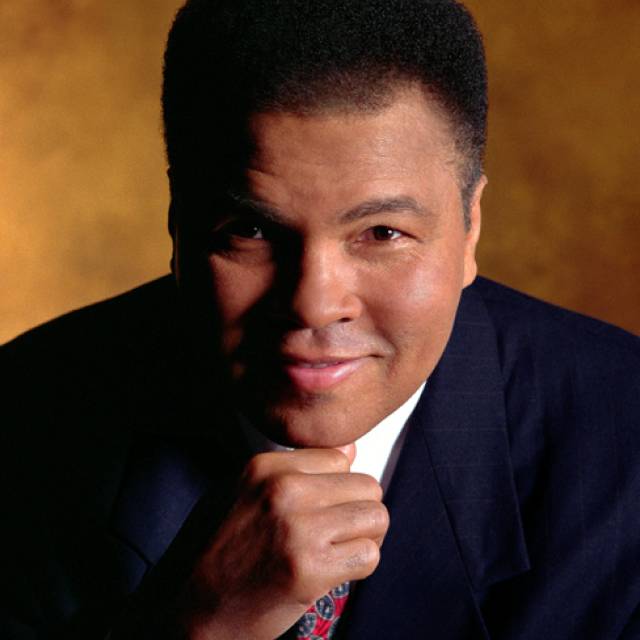
Muhammad Ali (1942 -     )Ali

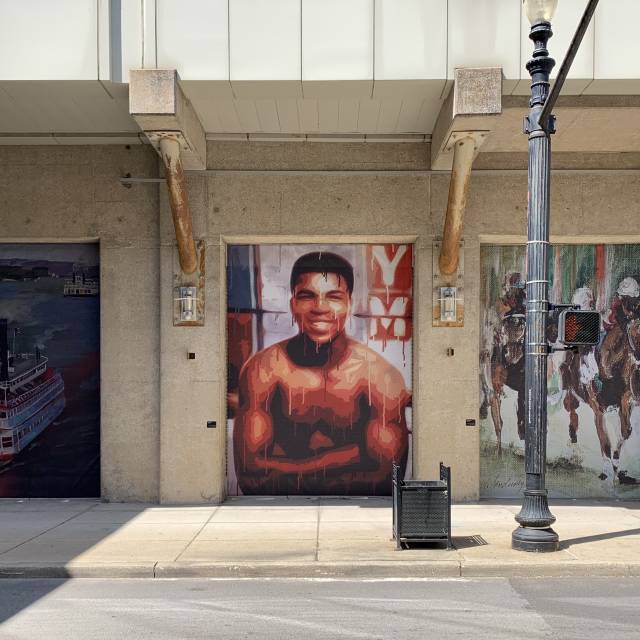
Muhammad Ali was born Cassius Marcellus Clay in Louisville on Jan. 17, 1942. He began his boxing career as an amateur at the age of 12. Ali turned professional in 1960. He won a share of the world heavyweight championship on Feb 25, 1964, when he defeated Sonny Liston.

Ali was devoted and committed to the Muslims. In 1967 he was convicted of violating the Selective Service Act, because of his refusal, on religious grounds, to be drafted into the armed forces. Ali was barred from boxing and stripped of his heavyweight title. The United States Supreme Court reversed his conviction in 1971.

His eighth-round knockout of George Foreman on Oct. 30, 1974 in Kinshasa, Zaire regained for Ali the world heavyweight title. After defending his title successfully six times, he lost to Leon Spinks on Feb. 15, 1978. Ali defeated Spinks on Sept. 16, 1978, making him the first boxer to win the heavyweight title three times. Ali fought for a couple of years after regaining his title and retired from the sport of boxing in 1981.

While Ali is best known for his successful boxing career as a three-time World Heavyweight Boxing Champion and an Olympic gold medal winner, his life in recent years has turned from the ring to the world stage. Ali has spent the last four decades doing humanitarian work and turning his passion for peace into a fulltime career. Ali has traveled around the world on humanitarian missions, and in 1998 was named a United Nations Messenger of Peace.

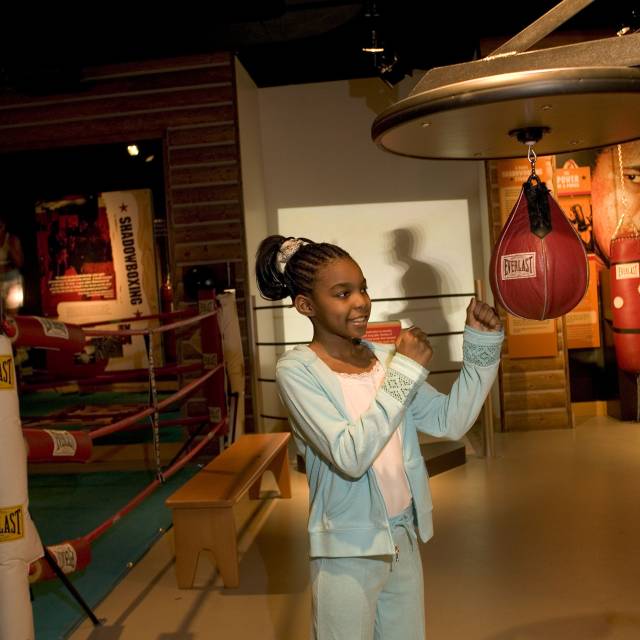
The new Muhammad Ali Center is a 93,000-square-foot educational and cultural center with a mission that includes promoting respect, hope and understanding inspiring adults and children everywhere to be as great as they can be.


Issac W. Bernheim (1848-1945)

Issac Bernheim came to the United States from Baden, Germany in 1867. After settling initially in Paducah, Ky. Issac and his brother, Bernard, moved their distillery business to Louisville in 1874. Bernheim was active in Louisville’s Jewish community, serving on the executive board of the Union of American Hebrew Congregations for more than 40 years and as treasurer of the American Jewish Committee from 1907 to 1922. A prominent philanthropist, Bernheim did much for the people of Louisville by providing the first home of the Young Men’s Hebrew Association (1889), Moses Ezekiels’s statue of Thomas Jefferson at the county courthouse (1899), an addition to Jewish Hospital (1918), George Bernard’s statue of Abraham Lincoln at the Louisville Free Public Library (1922), and the 14,000-acre Bernheim Forest in Bullitt County (1929). Toward the end of his life, Bernheim moved to Denver, Colorado.
 

Molly Clowes (1906-1992)

Perhaps the first woman to head the editorial page of a major American newspaper, Molly Clowes moved to Louisville from Birmingham, England in 1923 when her father, a former police officer with Scotland Yard, was hired as a police sergeant. Clowes was first a reporter for Louisville’s Herald-Post until 1936, when it closed and she joined the Courier-Journal as a reporter and feature writer. She began writing editorials while still a reporter in the 1930s. In 1941, Clowes became a full-time editorial writer and held that position until 1966, when she was named editor of the editorial page. Specializing in writing about foreign affairs and public health and welfare, she was editor until her retirement in 1971. Friends said she enjoyed French cooking, disliked local politics, and enjoyed discussing developments in Europe.


J. Henry Doerr (1847-1906)

At the age of five, Doerr immigrated to the United States with his parents from Gaumbach, Germany, settling briefly in New York City before moving to Louisville, where Doerr was educated. At the age of 14 he began to study photography with Edward Klauber and eventually opened his own photography business on Market Street after photographing the Union Army during the Civil War. He organized the Kentucky and Tennessee Photographer’s Association and was a member of the Louisville Board of Trade. In 1895 Doerr was authorized to make the first set of photographs of Cave Hill Cemetery, illustrating the transformation of Cave Hill’s farm fields into a landscape that increasingly paralleled the city. Doerr made a small fortune investing in a gold mine in Cripple Creek, Colorado, but died in Louisville after contracting pneumonia during a visit to the mine. He is buried in Cave Hill Cemetery.


Jimmy Ellis (1940 -     )

James "Jimmy" Ellis trained alongside his childhood friend, Muhammad Ali and credits Ali for giving him the inspiration to fight. On April 27, 1968, Ellis gained the heavyweight title by defeating the top heavyweight contender, Jerry Quarry. He reigned as world heavyweight champion from 1968-1970 before losing the title to the legendary Joe Frazier. Ellis and Ali fought one pro bout in 1971 with Ali getting a TKO in the 12th and final round. Ellis is currently a manager and trainer in the local and national boxing scene.


Ed Hamilton (1947 -     )

Born in Cincinnati but raised in Louisville, sculptor Ed Hamilton captures the strength, compassion and dignity of his subjects in his work of art. He is perhaps best known for his monuments: The bronze statue of heavyweight Hamilton boxing champion, Joe Louis, in Detroit; a statue of Booker T. Washington on the campus of Hampton University; A statue of Whitney M. Young, Jr., on the campus of Kentucky State University; a life-size bust of the late Civil Rights Leader, Medgar Evers and other works that pay tribute to many of Louisville's local community leaders.

Hamilton gained national attention in 1992 when his Amistad Memorial was unveiled in New Haven, Connecticut, and in 1998 for the unveiling of his African-American Civil War Memorial, "The Spirit of Freedom" in Washington, D.C. Hamilton's newest sculpture is the larger-than-life bronze statue of York, a slave who was a key member of the Lewis and Clark Expedition, (see York). The statue is located on the Belvedere next to the Ohio River in downtown Louisville.


Lionel Hampton (1908 - 2002)

The year was 1930 when Lionel Hampton, who would become the reigning King of the Vibraphone, started his musical career as a drummer. During that year Hampton met Louis Armstrong, who was impressed with the 17-year-old, after hearing him play drums in a L.A. nightclub for the Les Hite band. Armstrong invited Hamp (as he was called) to a recording session where Armstrong asked him if he knew how to "play a set of vibes." Never one to refuse a challenge, Hamp picked up the mallets and the rest is history. The first tune they cut, "Memories of You," became a hit for Armstrong.

Hampton's successful musical career awarded him many firsts and honors. These included playing for the inaugural celebrations of six presidents. His first inaugural was for Harry S. Truman in 1949, the first time African-American musicians played for an inaugural. Hamp toured overseas as an Ambassador of Good Will for Presidents Eisenhower and Nixon. He received the 1992 Kennedy Center Honors and also received more than 15 honorary doctorates, which included the Gold Medal of Paris, that city's highest cultural award.


Helen Humes (1909 - 1981)

Helen Humes was a versatile singer equally skilled on blues, swing standards and ballads. As a child she played piano and organ in church and made her first recordings when she was only 13. In 1938, Humes joined Count Basie's orchestra for three years. She left Count Basie in 1942 and wrote and recorded "Be-Baba-Leba," which was a commercial hit. Humes recorded tunes for films and television, and appeared in the Hollywood production of "Simply Heaven." In between projects, she came home to Louisville and occasionally stayed for months at a time.


Minnie Mae (Jones) Street Kidd (1904 - 1999)

Mae Street Kidd was a civil rights activist and politician. Although she let it be known that she did not like politics, she served for 17 years in the Kentucky House of Representatives. Known as the "Lady of the House," Kidd was the first woman to serve on the Rules and Enrollment committees of the Legislature. She was also the first female secretary of the Democratic Caucus. In 1968 she sponsored and helped pass a statewide open housing bill. In 1972, the Mae Street Kidd Act was passed, creating the Kentucky Housing Corporation, which gave low interest rate loans to home buyers of modest income. During her years as a politician, she admitted that her proudest achievement was the ratification by the Commonwealth of Kentucky of the Thirteenth (abolition of slavery), Fourteenth (full citizenship) and Fifteenth (right to vote) Amendments to the U.S. Constitution.


Lyman T. Johnson (1906  - 1997)

A long-time civil rights activist and educator, Lyman T. Johnson sued the University of Kentucky in 1948 to gain access for African-Americans to attend the university. His battle paid off, because in 1949 he was the first African-American to attend graduate school there, thus breaking the “color barrier†before desegregation in higher education became law.

Considered the most outspoken public school teacher, Johnson fought the school system to end unequal pay for African-American teachers and he pushed for equality in educational opportunities for all people. He also fought the city to desegregate Jefferson County schools, neighborhoods, swimming pools and restaurants. Johnson taught at Louisville Central High School for 33 years. He later became assistant principal of the former Parkland Junior High School, which is now Johnson Middle School, named in his honor, and he served on the Jefferson County Public School Board.
 

Helen Lang (1926-     )

The daughter of Chinese immigrants and 2005 recipient of the Mayor’s International Award for Lifetime Achievement, Helen Lang, has always taken a keen interest in her Chinese heritage and in the success of Louisville’s international community. The founder of Crane House, the Asia Institute, Inc., and its Board Chairperson since 1995, Mrs. Lang has long championed immigration issues, as well as women’s rights and human rights. As President of the Board of Directors and unpaid Executive Director from 1987 to 1994, Mrs. Lang helped broaden the scope

of Crane House, making it an Asian cultural center that is a unique and invaluable resource for students, teachers, business people, and others in the community that are interested in Asian cultures. The mission of Crane House is to actively promote understanding among the peoples of the United States and Asia through education. Through her outreach work in Louisville, she has done much to bring life-long Louisvillians and the newest members of our community together through cultural understanding and friendship.

Mrs. Lang majored in Far Eastern Studies at the University of Washington. Her first job was secretary to the Chief Chinese delegate to the United Nations in the 1940s. She speaks proficient Cantonese and some Mandarin. Mrs. Lang is an expert in Chinese cookery, which she taught for 17 years, and has served as a consultant to Louisville’s chefs and culinary editors.
 

Michael McDonald Muldoon (1837-1911)

Escaping the dismal conditions of 19th-century Ireland, Michael Muldoon immigrated to the United States in 1849 and settled in Louisville in 1860. A prominent monument maker and sculptor, his partner and he established a studio in Carrara, Italy, where marble was fashioned and sent to Louisville to be inscribed and distributed to cemeteries throughout the South and Midwest. Muldoon and other partners erected Louisville City Hall, Second Presbyterian Church, Lithgow (Board of Trade) Building, and others. He married Alice Lithgow in 1865 when her father was the Mayor of Louisville. They had four daughters. Muldoon is buried in Cave Hill Cemetery.


Isaac Burns Murphy (1861 - 1896)

Isaac Murphy was the first jockey to ride three Kentucky Derby winners: Buchanan (1884); Riley (1890); and Kingman (1891). His resting place is among the racing legends at Man-O-War Memorial at the Kentucky Horse Park in Lexington.


Samuel Plato (1892 - 1957)

Samuel Plato was one of the most successful local builders of the middle period of the twentieth century. Plato was credited with the banks at Sixth and Walnut (now gone), Virginia Avenue School, Green Street Baptist Church, Lampton Street Baptist Church, and Broadway Temple A.M.E. Zion Church.


Georgia Davis Powers (1923 -     )

The first African-American woman to be elected to the Kentucky State Senate; Powers went on to serve for 21 years. In 1968 she sponsored the Kentucky Fair Housing Law making Kentucky the first state in the South to enact such legislation.


Joie Ray (1923 -     )

Joie Ray was the first African-American race car driver from Louisville. Born to affluent Louisville parents in 1923, Ray understood the race game in more senses than one. But he never questioned his prospects for racing, as an African-American driver on what was still a white man's playground. In 1947, Ray ran his first race as a driver and owner.


William Henry Sheppard (1865 - 1927)

In 1890 William Henry Sheppard, (the Black Livingstone), a 24-year-old African-American missionary, was sent to the Belgian Congo by the Southern Presbyterian Church. He ran a mission in the heart of the Congo jungles, staffed by African-Americans, for two decades. While in the Congo, Sheppard help to expose the atrocities that occurred under the leadership of Belgian King Leopold II. This exposure led Belgium to release its hold on the Congo. Sheppard returned to America periodically to tell of his African experiences and to raise funds for the mission.

In 1912 Sheppard came to Louisville to become pastor of Grace Presbyterian Church, located in the Smoketown neighborhood (see Our Neighborhoods). He remained the pastor until his death on November 25, 1927. He is buried in Louisville Cemetery.

In 1924, the city of Louisville honored Sheppard by naming a park after him, the William H. Sheppard Park on 17th & Magazine Streets. And in 1942, naming the Sheppard Square Housing Project, in the Smoketown neighborhood, after him.


Frank L. Stanley Sr. (1905 - 1974)

As publisher of Louisville's African-American owned Louisville Defender Newspaper, Frank L. Stanley Sr. was recognized as an influential desegregation leader. He drafted the 1950 legislation that led to the desegregation of Kentucky's colleges and universities and he obtained political support for the law that created the Kentucky Commission on Human Rights in 1960. Stanley was also commissioned by the U.S. War Department in 1946 and 1948 to study the segregation of U.S. troops after WW II and recommended the desegregation of U.S. armed forces. Besides leading the fight against segregation, Stanley co-founded the National Newspaper Publishers Association, an association for African-American publishers, and he was a jurist for the Pulitzer Prize awards panel.


Reverend Dr. William E. Summers III (1918 - 1996)

Born in Louisville, William E. Summers III, a noted African-American broadcast journalist, made history in 1967 as the first African-American in the United States to manage a radio station. In 1971, he became the first African-American radio station owner in the state of Kentucky when he purchased WLOU-AM.

Rev. Summers received many honors and recognitions. These honors included being inducted into the University of Kentucky Journalism Hall of Fame in 1996; serving as the first African-American chairman of the Kentucky Derby Festival Board; receiving the Derby Festival's Distinguished Service Award and the City of Louisville's Freedom Award, which is given to a person who embodies the principles of Martin Luther King, Jr.


Cato Watts (birth and death dates unknown)

A slave of Mr. John Donne, Watts is credited with being the first African-American man to come to the Falls of the Ohio. He was part of a George Rogers Clark expedition.


Sylvester Weaver (1896 - 1960)

Born in the Smoketown neighborhood, Sylvester Weaver was a blues guitarist and gospel singer. He began his recording career in 1923 and became the first blues guitarist to ever record. His best-known recording was "Guitar Rag." He enjoyed a successful blues and gospel-recording career from 1923-1927. Weaver is buried in Louisville Cemetery.


Jimmy Winkfield (1882 - 1974)

Jimmy Winkfield was the last African-American jockey to win a Kentucky Derby, finishing first in both 1901 and 1902. He tallied over 2,600 career victories. Winkfield had to move to Russia to advance in his field. He gained fame there, but fled in 1919 to escape the Russian Revolution. Winkfield and his family settled in France where he finished his career as a trainer outside of Paris.


York (1772 - 1832)

York was a slave to William Clark, a frontiersman and Army officer. In 1803 York left the Falls of the Ohio with his master, as a member of the famous Lewis and Clark Expedition (1803-1806). He was the only African-American man on the expedition and gained the admiration and awe of the native Americans, who called him "Big Medicine," because of his size, strength and agility. Although York believed that the expedition would earn him his freedom, Clark disagreed for some time, finally giving York his freedom 10 years later. It is speculated that York spent the last years of his life as a businessman and died in Tennessee. A bronze statue of York, created by artist Ed Hamilton, is located in downtown Louisville on the Belvedere.